Frontyanra
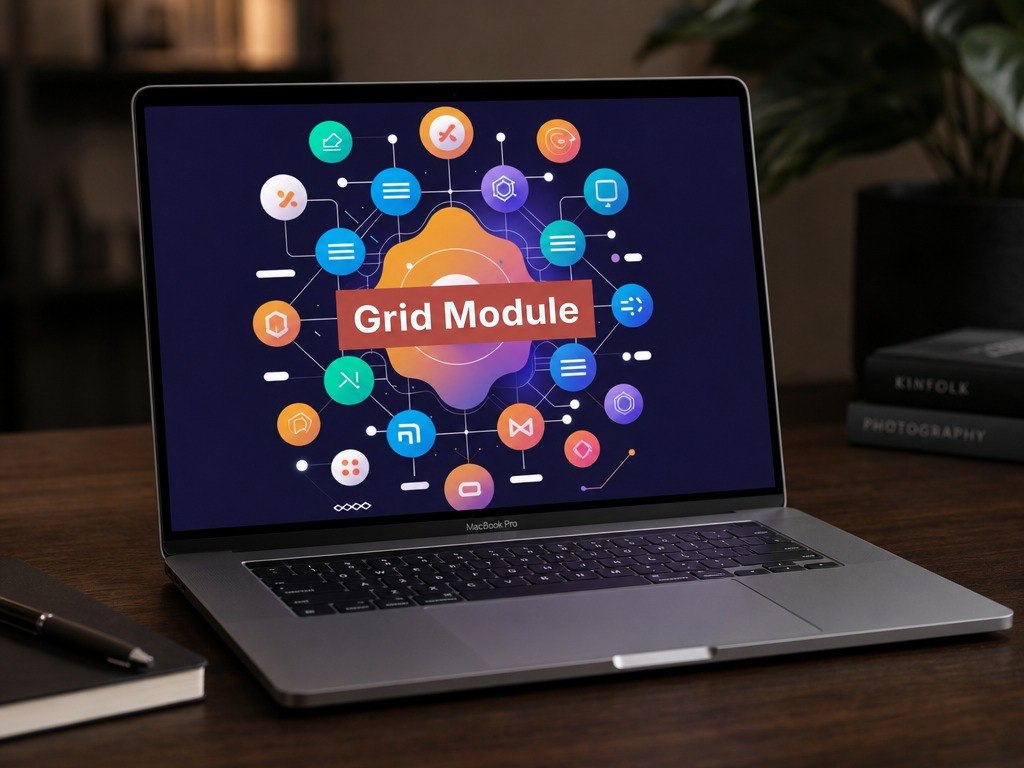
Grid Module
Grid Module
Couldn't load pickup availability
- 💻 Digital course available after purchase
- 📅 Long-term availability
- 🔒 Secure checkout
- 📝 Content updated in 2026
Self-paced learning overview
1. Problem Statement
When a page starts to include many sections, cards, and text parts, basic element placement may no longer be enough. A learner may see that the blocks exist and the styles are written, but the overall grid still looks uneven or overloaded. Difficulty often appears with matching cards, columns, gaps between elements, and page behavior on different screen widths. It can also be hard to keep code organized when one page contains many similar fragments. Grid Module is created to help organize work with grids, repeated parts, and page composition.
2. Solution
Grid Module explains how to build study pages with several areas and repeated elements. The learner explores the principles of creating a grid, grouping cards, adjusting columns, gaps, and the overall page rhythm. The materials show how CSS helps control element placement, while JS can add simple actions to an already prepared structure. Examples are built around page parts where order matters: a card collection, a study catalog, description blocks, and sections with buttons. This approach helps learners move from separate sections to a more organized page with a thoughtful grid.
3. What's Inside
- Module 1: Grid Thinking — learners find out how to think of a page as a grid of connected parts rather than separate blocks.
- Module 2: Card Collection Layout — learners explore how to create card groups with matching structure, spacing, and placement.
- Module 3: Column and Gap Practice — learners study how to work with columns, gaps, and proportions between elements.
- Module 4: Responsive Section Basics — learners see how sections can change placement on different screen widths.
- Module 5: Repeated Code Order — learners practice keeping HTML and CSS organized when a page contains many similar blocks.
- Module 6: Simple JS for Grid Parts — learners explore simple JS scenarios for changing card states, showing extra text, or switching a view.
- Module 7: Grid Page Build — learners build a study page with several sections, a card grid, styles, and small logic.
4. Who is this for?
✅ A good fit if you...
- have already created pages with several sections;
- want to work better with cards, grids, and columns;
- notice that page elements often look uneven;
- want to learn how to keep repeated blocks organized;
- are looking for practice with pages where HTML, CSS, and JS are combined in one layout.
❌ Not for you if...
- you have not yet worked with basic HTML structure and CSS styling;
- you are looking only for introductory material without grids and repeated blocks;
- you expect statements about specific career or financial outcomes;
- you want learning tied to names of third-party services, programs, or operating systems;
- you are looking for a course without practical work on page sections.
5. What You'll Learn
- How to build a page based on a grid.
- How to create groups of cards with matching structure.
- How to work with columns, gaps, and element placement.
- How to keep a shared style across repeated blocks.
- How to prepare sections for viewing on different screens.
- How to stay organized in HTML and CSS when a page contains many similar parts.
- How to add simple JS logic to cards or sections.
- How to build a study layout with a grid, text, cards, and small actions.
6. Store Terms
- 30-day money back
- Risk-free
Do I need previous experience with HTML, CSS, or JS?
Do I need previous experience with HTML, CSS, or JS?
No, the materials are built so learners can begin with basic concepts. In each plan, topics are presented gradually, with explanations, examples, and small practical tasks.
What format do the materials use?
What format do the materials use?
The courses include lessons, modules, code examples, short explanations, and learning resources. The format is focused on careful study, repetition, and practice.
Share